
Protect Our Community:
Know Your Rights
Stay informed about ICE activity in the Twin Ports. Learn your rights, download signage, and access community safety resources.
Know Your Rights
Every person in the United States has rights when interacting with Immigration and Customs Enforcement (ICE) or law enforcement, regardless of immigration status. We stand in solidarity with all communities affected by heightened enforcement and racial profiling. Collective safety depends on shared awareness, preparedness, and support.
This page provides clear, practical guidance to help individuals and families stay informed and prepared. See TPAC’s full Community Impact Statement.
-
Call the Twin Ports Rapid Response Hotline: (218) 213-5009
Call your attorney
You have the right to remain silent.
You do not have to open your door without a judicial warrant signed by a judge.
You do not need to sign any documents without speaking to an attorney.
-
1. Your Right to Remain Silent
You do not have to answer questions about your immigration status, birthplace, or how you entered the U.S.
You may say: “I choose to remain silent.”
2. Your Right to Refuse a Search
You do not have to consent to a search of yourself, your belongings, or your home.
If officers ask to enter, you may say: “I do not consent to entry.”
3. Your Right to a Lawyer
You have the right to speak with an attorney before signing anything.
You can request legal representation during interviews.
-
Do not open the door. Ask officers to slide the warrant under the door.
A valid entry warrant must be signed by a judge.
You do not have to let ICE in if they only have an “ICE warrant” (Form I‑200 or I‑205).
You may record the interaction if it is safe to do so.
-
Ask if you are free to leave. If yes, walk away calmly.
You are not required to answer questions about your immigration status.
Do not provide false documents or false information.
-
Important documents stored safely
Copies shared with trusted contacts
Emergency numbers saved
Safety plan practiced
Children know who to call
Rapid Response hotline posted in the home
-
This form is for reporting incidents or effects related to or caused by recent federal actions in Minnesota, including but not limited to: violations of constitutional rights (racial profiling, excessive force, retaliation against protestors, observers, and media), business closures, reduced healthcare access, reduced education access, other issues impacting public safety and civil liberties, federal funding cuts, federal grant terminations, terms and conditions tied to federal program participation, other administrative actions by Federal agencies. The information you provide may be used by the MN Attorney General to support its current lawsuit challenging the DHS surge, as well as future actions to enforce the law.
-
An administrative warrant DOES NOT grant permission for anyone to enter a business. Only a judicial warrant signed by a judge with the business name *and* address would grant permission, but it is highly unlikely for anyone to have that. If your business name and address are not listed, they do not have consent to enter. They may have a judicial warrant with a person’s name - this does not give them permission to search your business for that person.
ICE DOES NOT have legal authority for traffic stops, as only border patrol, police and troopers have legal authority to pull someone over.
DO exercise your right to remain silent (especially if you do not have status) and DO NOT lie, as lying to federal officers is a felony.
DO post signs that say, "Private space: Only staff and authorized visitors beyond this point." Document (e.g., photograph, video) that you have those signs in place before anything happens.
DO train your staff on which areas are “private”, what to do if ICE comes, what rights they have, not to run/resist, how to document via video/photos, and how to read warrants. Identify 1-2 people that are willing, able, and comfortable speaking with ICE if they come. Consider taking a constitutional observer training.
If your space DOES NOT sell anything (e.g., a church), then it can be considered a private space in which you DO NOT need to let anyone in.
DO a practice ICE Raid drills at your workplace, ensuring that folks know what to do in different scenarios.
DO record (video, audio, photo) as soon as any potential ICE encounters appear to be taking place. Focus recordings on the ICE agent and not bystanders. DO NOT livestream. Share videos with legal representatives.
DO NOT sign anything without legal counsel.
DO memorize phone number(s) of an organization/individual who can provide access to legal support if detained (e.g., local Rapid Response number, ACLU Minnesota) or your attorney.
DO request trained legal observers (by calling Twin Ports Rapid Response 218-213-5009) to keep watch on your business, safely escort staff to their cars, etc.
DO consider installing cameras in and around your business.
-
TPAC Board and Community are here for you! Please reach out to us at twinportsapidacollective@gmail.com if you have questions, needs, or simply to be in-community.
Join TPAC, either as an APIDA Member or an Ally, or just join our Mailing List so you don’t miss out on any of our events and news!
APIDA Safety Planning Tips

-
U.S. passport
Certificate of Citizenship/U.S. citizenship certificate
Green card*, and/or other current documentation of legal residence
Scan/photograph/make copies to share with trusted folks.
Do not carry foreign documents such as a non-U.S. passport.
Legal immigrants: Make sure your A-number (which is on your current immigration document) is known by trusted folks; your lawyer & loved ones will need it to locate you in case of detention.
-
Choose trusted emergency contacts
Keep documents in one safe place
Practice what to say
Memorize key numbers
Twin Ports Rapid Response hotline (218) 213-5009
Lawyer or legal service
Emergency caregiver for children
Help children memorize important phone numbers
Use a dedicated group chat or Signal circle
Keep “family safety communications” separate from daily chats.
Prepare ICE emergency scripts - store in your phone’s Notes app.
Consider carrying any life-saving medication with you in case you are detained.
-
Check out resources from Minnesota 8 (MN8), available in multiple Asian languages. Access their guide for what to do if detained.
In the last couple of weeks, several US citizen protestors/observers in MN have been arrested by ICE. Here's what we learned from these situations:
With the exception of one person who was taken to the hospital, the rest have been taken to the Whipple Federal Building (Minneapolis) immediately after their detention by ICE. They have not been "booked" or recorded in any jail roster or other public list of detainees. No one has been able to get confirmation of their whereabouts over the phone or email.
Detainees have been held for approximately 4-6 hours and then released. Two things seem to have affected when and whether they are released from custody: (1) detainees asking for a lawyer and saying they are not going to answer questions (right to attorney, right to silence); (2) lawyers showing up and demanding to see their clients being held in detention. Hopefully this will not happen to any more community members, whether citizens or not. But if it does, detainees should ask for an attorney and tell ICE you will not answer questions or sign anything. They should also try to get in contact with an attorney as soon as possible. People on the outside should communicate with a trusted attorney and request they go down to the Whipple Federal Building and ask to speak with the detained person. As much information as possible about detainees (name, DOB, place of detention, time of detention, medical status) should be shared with attorneys.
Lawyers to contact are Anna Hall (Legal Rights Center), 612-337-0133; Kevin Riach, 612-203-8555; and/or National Lawyers Guild hotline, 612-444-2654
Resources for Supporting Community During ICE Operations
The Minnesota Council of Nonprofits has published a comprehensive guide for supporting immigrant communities during ICE raids. It includes:
Actionable ways to support families
Know Your Rights materials
Links to legal help, rapid response efforts, and training
Guidance on how communities can organize safely
This list is extremely up‑to‑date (January 2026) because it was created in direct response to the largest scale immigration operation ever happening right now in Minnesota.

APIDA-Focused Resources
Volunteer Lawyers Network
Regularly updates resources and forms to help individuals and families prepare for potential deportation, detention, or family separation.
Know Your Rights Digital Booklets (English + Asian Languages)
Created by MN8, these booklets provide rights information in multiple Asian languages for accessibility across APIDA communities.
Intercountry Adoptee Rights & Safety Guide (2026)
Provides immigration‑related information specifically relevant to Asian adoptees and other international adoptees navigating legal or status concerns.
Resources and Books for Parents, Caregivers & Educators
Guidance for talking with children about immigration, supporting mental health, preparing family emergency plans, and finding appropriate legal and emotional resources.
ICE Detainee Locator
A real‑time federal tool that allows families, lawyers, and allies to locate someone detained by ICE using the person’s name and/or A‑number.
Immigrant Law Center of MN – Detention Line
📞 651‑641‑1011
Help locating detained loved ones or receiving legal guidance.
Printable Know Your Rights Cards (Including Hmong)
ACLU‑MN offers wallet‑sized KYR cards available in English and Hmong, supporting linguistic accessibility for Southeast Asian community members.
Printable Safety Materials for Individuals & Businesses
Easy‑to‑use printouts designed to help community members and businesses protect themselves during ICE encounters.
TechBestie – Digital Safety Tools for Immigrant Communities
TechBestie highlights two key tools supporting immigrant safety during ICE activity: StopICE.net, which lets anyone report or receive ICE sightings by texting REPORT to 877‑322‑2299, and ICEBlock, a privacy‑first iPhone app showing confirmed ICE activity within a 5‑mile radius with no login or data collection. These tools help communities stay informed, safer, and connected during enforcement surges.
What Can Allies Do?
-
Taking a constitutional observer training is crucial for allies to understand their rights and the rights of others during law enforcement and immigration activities. This training equips individuals with the knowledge and skills to observe, document, and report law enforcement interactions without obstructing operations. It emphasizes calm presence, careful documentation, and respect for boundaries, ensuring that constitutional rights are respected and that accountability is upheld. By participating in these trainings, allies can contribute to a safer and more accountable community, supporting the legal rights of immigrant neighbors and ensuring that their rights are not violated.
-
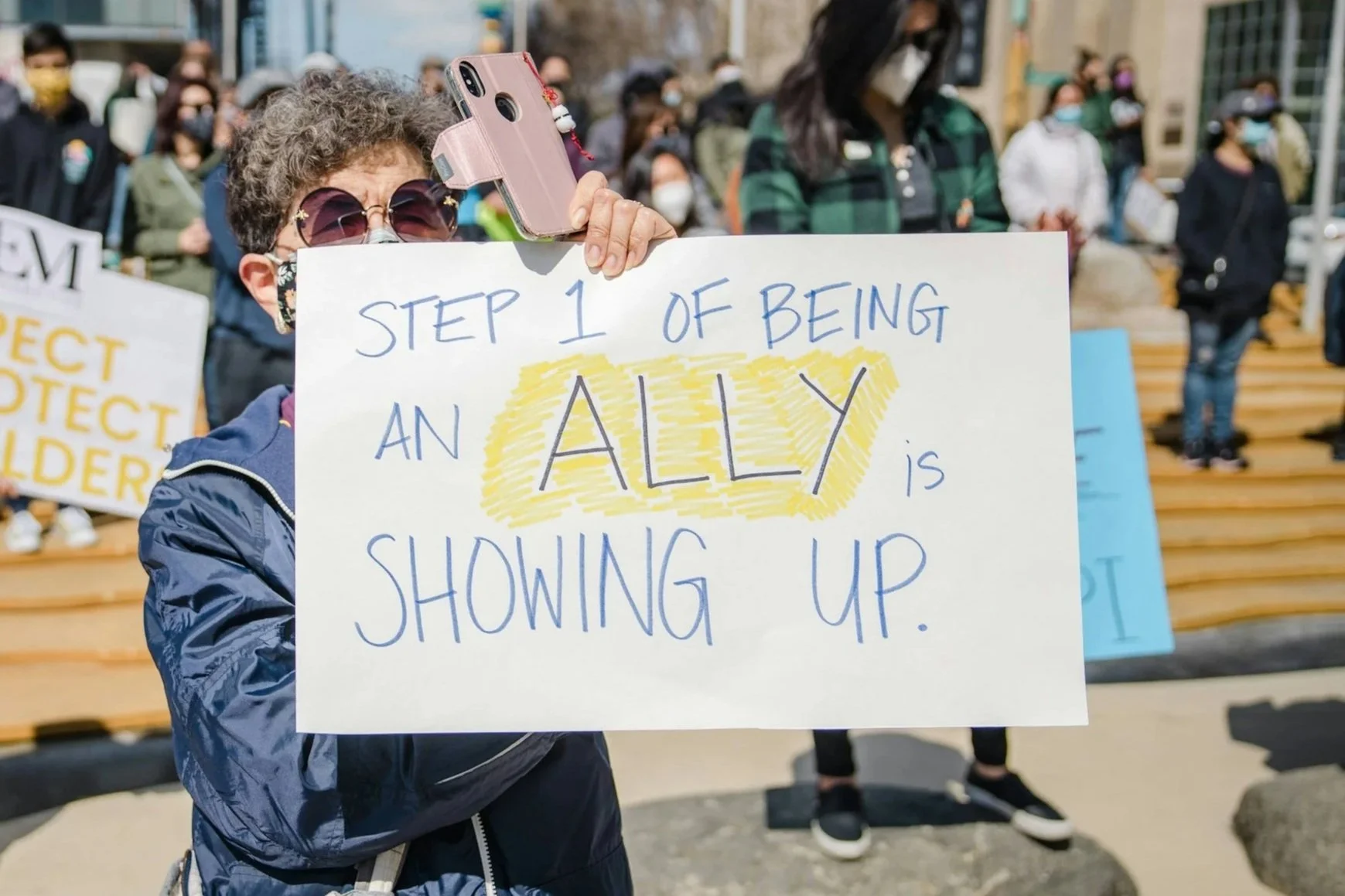
During periods of increased immigration enforcement, racial profiling, or community‑wide stress, APIDA and other BIPOC residents often experience fear, isolation, and Offer rides or basic assistance (grocery shopping, emergency housing, childcare, etc.). If you offer, please be reliable and available. letting folks know you acknowledge what’s happening and care goes a long way.
-
Many APIDA and BIPOC‑owned businesses are facing heightened fear and instability due to increased ICE activity in industries where APIDA workers are highly represented, leading many owners and employees to feel unsafe going to work or operating their businesses. When allies intentionally support these businesses by shopping/eating there, showing up in person, or purchasing gift cards—they help counteract drops in customers caused by fear, provide essential financial stability, and offer a visible presence that can increase safety if ICE appears, especially when allies are trained observers who can document and notify rapid‑response networks if needed.
-
Allies can play a powerful role in community safety by helping APIDA and BIPOC neighbors know their rights before an encounter with ICE or law enforcement ever occurs. Sharing clear, accessible rights information—such as what to do if approached at home, at work, or in public—helps reduce fear and equips individuals to respond safely and confidently. When allies take time to learn this information themselves and then actively share it with friends, neighbors, coworkers, and local businesses, it strengthens community preparedness, ensures people are not caught off guard, and reinforces that no one has to navigate these threats alone.
-
Have age-appropriate conversations with your children about how they can support APIDA/BIPOC friends and neighbors.
-
Stand With Minnesota has created a donation directory. You can also support the work TPAC is doing by donating!
-
Consider posting a sign or flyer to help people feel safe in your business or office—or inviting business and property owners to do the same. The more places we feel safe and supported, the better